Governor races: 18 to 18 split, nine battlegrounds and the empty chairs
Democrats need a net gain of two seats to reclaim the governor's mansion majority they have lost since 2010, but face 19 open seats and a Republican money advantage in states like Ohio and Nevada.
By Maya Morris ·
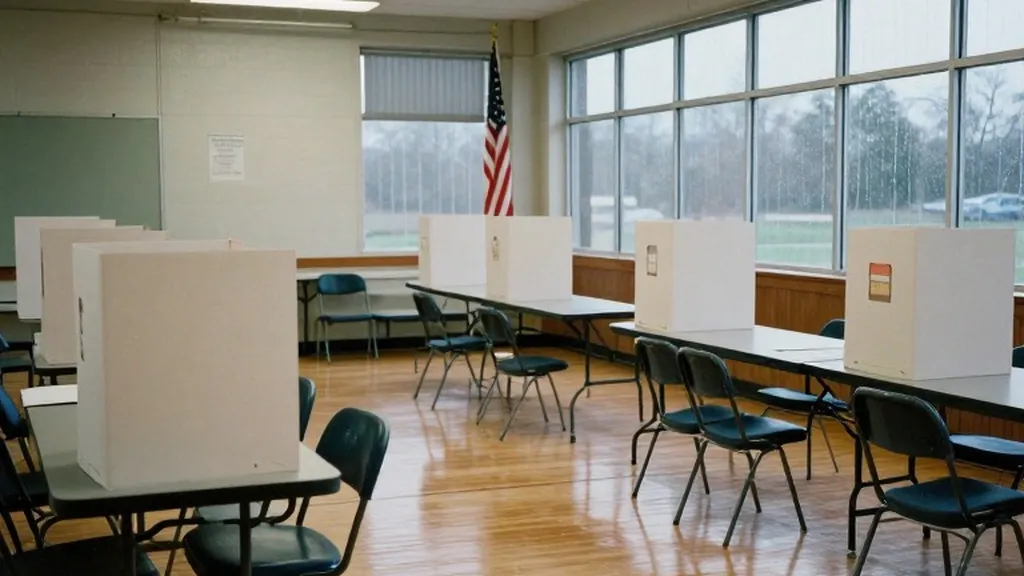
As voters head to the polls on Tuesday, November 3, the landscape of executive power in the United States is poised for a significant shift. According to Ballotpedia, 36 governorships are up for election, creating a unique scenario where the two major parties enter the day holding an equal number of offices. Republicans currently hold 18 of the governor's seats on the ballot, while Democrats hold the other 18. This perfect parity sets the stage for a decisive contest, as Democrats require a net gain of two governorships to achieve a nationwide majority. That majority has eluded them since 2010, making this midterm election a critical test for the party's ability to rebound from recent midterm losses.
The complexity of these races is heightened by the number of open seats. Ballotpedia notes that 19 of the 36 races feature no incumbent on the ballot. This high turnover is driven largely by term limits, which apply to 15 governors. Additionally, three sitting governors have chosen not to run for reelection: Kim Reynolds of Iowa, Tim Walz of Minnesota, and Tony Evers of Wisconsin. In Rhode Island, incumbent Daniel McKee lost his primary, further adding to the list of states without a defending officeholder. The absence of incumbents often leads to more competitive environments, as voters are not bound by loyalty to a known figure and campaigns must be built from the ground up.
Nine specific governor races are identified by Ballotpedia as battlegrounds: Alaska, Arizona, Georgia, Iowa, Kansas, Michigan, Nevada, Ohio, and Wisconsin. These states will likely determine the final balance of power. Democrats are defending five governorships in states that Donald Trump won in the 2024 presidential election. These include Arizona, where Katie Hobbs is running; Kansas; Michigan; Pennsylvania, where Josh Shapiro is seeking reelection; and Wisconsin. Conversely, Republicans are defending two governorships in states that Kamala Harris won in 2024: New Hampshire, where Kelly Ayotte is the incumbent, and Vermont, where Phil Scott is running again.
In Georgia, the race is particularly high profile. Republican healthcare executive Rick Jackson is facing Democratic former Atlanta Mayor Keisha Lance Bottoms. This contest is significant because it involves succeeding Brian Kemp, who is term-limited. The Associated Press and PBS NewsHour have highlighted this matchup, noting that Georgia is a state where economic concerns and cost of living issues are front and center for voters. The outcome here could signal how voters are responding to the administration's policies on healthcare and economic stability in a swing state.
Nevada presents another key contest, with Republican Governor Joe Lombardo facing Democratic Attorney General Aaron Ford. The Associated Press has labeled Nevada, along with Texas and Florida, as a competitive governor race. In these states, the fight is not just about local issues but also about the national mood. The AP-NORC poll indicates that 35% of U.S. adults approve of President Trump's job performance, while about 7 in 10 say the country is heading in the wrong direction. This sentiment is likely to influence voting behavior in governor races, where voters often choose a candidate from the party they believe can best address their economic frustrations.
Ohio offers a notable matchup between Republican Vivek Ramaswamy and Democrat Amy Acton. The Associated Press reports that Ramaswamy's campaign has faced some backlash over an advertisement featuring Acton's estranged mother. Despite this, the race remains tight, and the AP has noted that Ohio is one of the states where the new congressional map, resulting from mid-decade redistricting, may play a role in how voters perceive local leadership. The use of new maps in Ohio, along with California, Florida, Missouri, North Carolina, Tennessee, and Texas, adds a layer of complexity to the electoral landscape, as these new boundaries can sometimes produce unexpected voting patterns.
The financial dynamics of these races are also a key factor. The 2026 elections are expected to be the most expensive in history. According to an AP analysis of AdImpact data, Republican committees have outraised and outspent their Democratic counterparts, largely helped by Trump-affiliated groups and billionaire Elon Musk. At the candidate level, however, Democrats have outraised their opponents. This discrepancy highlights a structural challenge for Democrats, who must rely on efficient spending to overcome a larger war chest at the committee level. The AP notes that 88.1% of Republican general election TV ad spending has gone to states and districts that Trump won in 2024, suggesting a strategy focused on consolidating support in areas where the president has strong name recognition.
For Democrats, the goal is to hold a majority of governorships for the first time in two decades. This would be a significant morale boost and a strategic advantage for the party as it prepares for the 2028 cycle. A strong showing in governor races would also support potential 2028 presidential candidates such as Gavin Newsom, JB Pritzker, and Pete Buttigieg. The Associated Press describes the current election as a referendum on Trump's second term, with voters struggling with high prices and angry over an unpopular war with Iran. This context is crucial for understanding why voters in governor races might lean toward challengers or incumbents from the opposing party, depending on how they perceive the administration's handling of these issues.
The administration of the election itself has also been a point of contention. Reuters reports that a federal judge temporarily barred the Trump administration from carrying out a plan to prevent noncitizen voting, a move critics say risks disenfranchising eligible voters. This legal battle, along with the Justice Department's threats to prosecute local election officials, has raised concerns about voter confidence. In Alaska, the Trump administration filed a lawsuit related to the certification of the Senate result, which, while focused on the Senate, reflects the broader tension between the executive branch and state election officials. These factors could influence turnout and the final count in governor races, particularly in states where the margin of victory is expected to be narrow.