435 Seats, 46 Battlegrounds: The Math That Defines Today's House Race
Democrats need a three-seat gain to reclaim the House, facing new maps in seven states and a significant Republican funding advantage.
By Justin Brooks ·
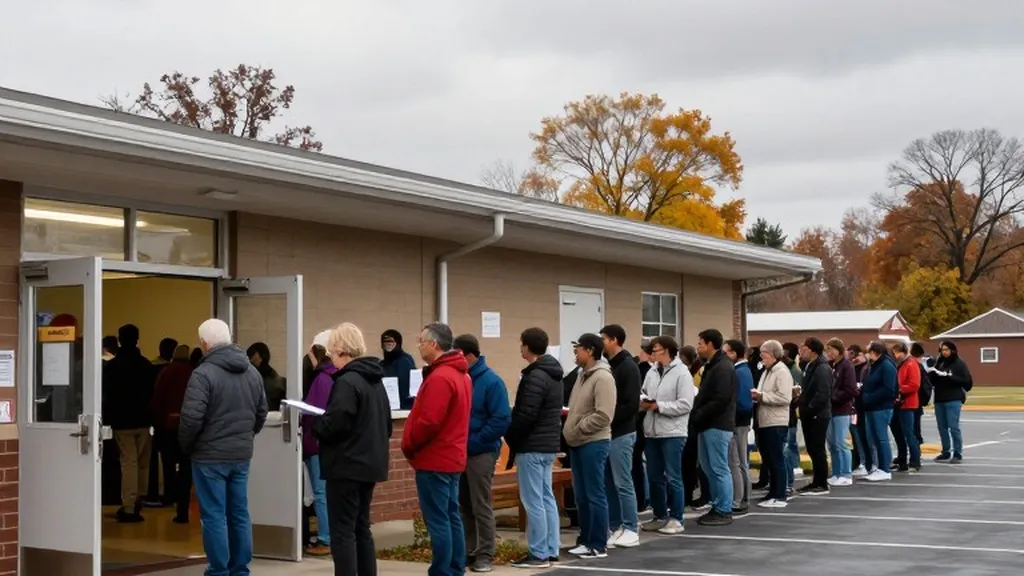
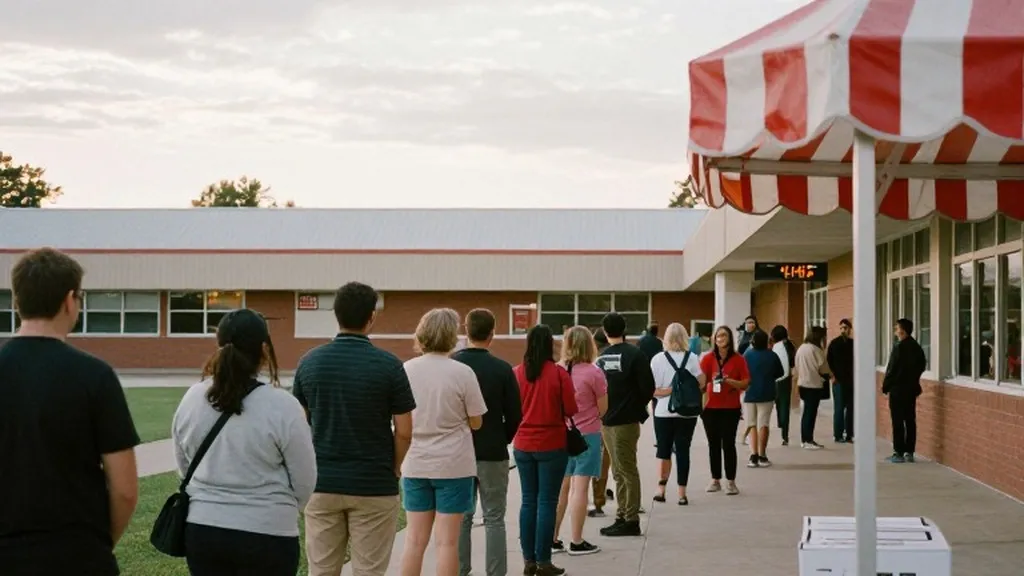
Voters across the nation are heading to the polls on Tuesday to decide the composition of the U.S. House of Representatives for the final two years of President Donald Trump's second term. All 435 seats are up for election, a full turnover that will determine which party controls the lower chamber in the new Congress. The current balance of power is precarious, with Republicans holding 218 seats and Democrats holding 214, alongside one independent and several vacancies. This narrow split means that a shift of just a few districts will alter the legislative landscape significantly for the next two years.
The arithmetic of the race is precise and unforgiving for the incumbent party. Democrats require a net gain of three districts to secure a majority, while Republicans can afford to lose no more than two seats to retain control. Ballotpedia identifies 46 battleground districts where the outcome is considered competitive, with 25 of those seats currently held by Democrats and 21 by Republicans. The stakes are heightened by the fact that 60 House incumbents, including 23 Democrats and 37 Republicans, have chosen not to run again, opening the door for new candidates in key areas.
Redistricting plays a central role in today's contest, with seven states using new congressional maps for the first time. California, Florida, Missouri, North Carolina, Tennessee, and Texas have adopted new boundaries, and Ohio is also utilizing a new map. These changes have reshaped the political geography of the House, creating new competitive districts while potentially solidifying others. The new maps reflect the mid-decade redistricting process, which aims to adjust district lines to align with population shifts, though critics argue they can also be used to advantage specific parties.
Financial resources are a major factor in this election, which is projected to be the most expensive in history. Republican committees have outraised and outspent their Democratic counterparts, aided by Trump-affiliated groups and contributions from Elon Musk. An analysis of AdImpact data by the Associated Press reveals that 88.1 percent of Republican general election TV ad spending is concentrated in states and districts Trump won in 2024. More than $850 million of that spending targeted areas where Trump won by 10 points or more, indicating a strategy to protect strongholds and fund competitive races elsewhere.
Despite the funding advantage, Democrats are described as cautiously optimistic about their chances. The Associated Press reports that the election is being viewed as a referendum on Trump's second term, with voters citing high prices and an unpopular war with Iran as primary concerns. AP-NORC polling shows that 35 percent of U.S. adults approve of Trump's job performance, while only 25 percent approve of his handling of the economy. Approximately 70 percent of voters believe the country is heading in the wrong direction, with most blaming the president for rising costs.
Voter participation has surged ahead of schedule, with more than 57 million people having already cast ballots as of Monday. This figure surpasses the early vote totals from four years ago in many closely watched states, suggesting a high level of engagement among the electorate. The U.S. Postal Service has added hours, staff, and special lines to ensure that mail-in ballots are counted on time, addressing logistical challenges that could impact the final tally. This early turnout provides a baseline for the day's voting, though the final results will depend on the remaining in-person voters.
The political implications of a Democratic victory in the House are significant. If Democrats gain control, investigations and possible impeachment proceedings become likely, led by House Democratic Leader Hakeem Jeffries. Jeffries has outlined a 100-day agenda focused on the cost of living and oversight of the administration. A strong Democratic night would also boost the profiles of potential 2028 presidential candidates, including Gavin Newsom, JB Pritzker, and Pete Buttigieg, while potentially complicating the path for Vice President JD Vance.
Republicans are fighting to break the historical pattern of a president's party losing seats in midterm elections. They have relied on redistricting and a strong fundraising machine to defend their majority. However, new districts in states like Florida may not vote as the maps suggest, adding a layer of uncertainty to the race. The Associated Press notes that one or two seats could tip the balance in either chamber, making every vote in the 46 battleground districts crucial to the final outcome.
The mood on the ground is mixed, with voters expressing frustration over economic conditions. James Moore, a 57-year-old librarian in Raleigh, North Carolina, told reporters that he is paying more for taxes, healthcare, and everything else. In contrast, Mark Barker of Palm Beach Gardens, Florida, said he has been following Trump and believes he is doing an awesome job. These individual perspectives reflect the broader national debate over the direction of the country and the performance of the current administration.
Election officials are navigating a complex administrative landscape as polls open. A federal judge temporarily barred the Trump administration from carrying out a plan to prevent noncitizen voting, a move critics say risks disenfranchising eligible voters. Another judge ordered the administration to stop demanding that California election officials segregate ballots cast by people on lists of suspected noncitizens. These legal developments are part of a broader dispute over the administration's approach to election integrity, with Democrats expressing concerns about interference and intimidation.
The day's proceedings will also have implications for the Senate, where 35 seats are up for election. While the House race is a separate contest, the overall outcome of the midterms will determine the balance of power in Congress for the next two years. Wall Street is watching closely, with Reuters noting that results could add to investor concerns about AI spending and debt ceiling negotiations. The final tally will emerge as polls close across the country, with some states closing as early as 6:30 a.m. and others as late as 9 p.m.