Trump's $5,000 Dividend: A Promised Payout or a Pricey Election Gamble?
The president's Dallas promise hinges on GOP control, but Speaker Johnson admits it needs votes, and critics question the trillion-dollar cost.
By Nicholas James ·
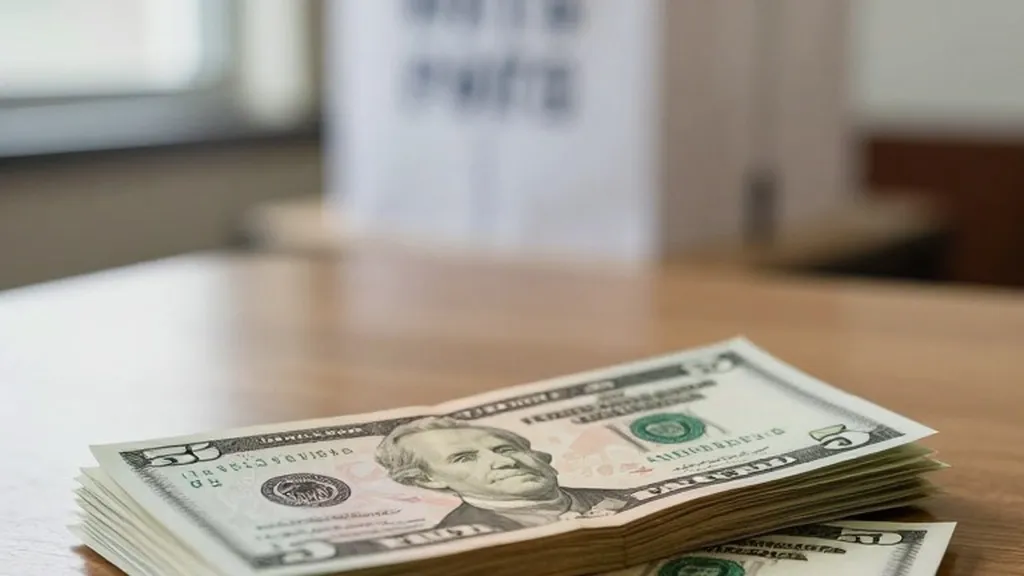
President Donald Trump stood before the Republican Midterm Convention in Dallas last week and offered a stark incentive to voters. He pledged that if the Republican Party maintains control of both the House of Representatives and the Senate, he will issue a $5,000 payment to every adult citizen in the United States. The president labeled this payout the Trump Dividend, framing it as a reward for the country's economic success under his administration. This direct link between election results and financial benefit has intensified the midterm race, turning a standard policy debate into a transactional proposition for millions of Americans.
The promise is specific in its conditions. Trump stated that the payment would go to every adult citizen, though he did not provide a detailed mechanism for how the funds would be distributed or the exact timeline for disbursement. In interviews following the speech, the president suggested the money would come from tariff revenues, which he described as generating unprecedented amounts of cash for the federal government. However, the administration has not released a formal plan detailing the logistics of the distribution or the specific legal authority that would allow the president to execute such a large-scale transfer of funds without further legislative action.
House Speaker Mike Johnson, a key figure in the Republican majority, addressed the logistics of the proposal on Sunday. Johnson stated clearly that congressional approval is required for the payments to proceed. He described the idea as creative and pledged that Congress would work to find a consensus to implement it. This statement from the Speaker contrasts with Trump's earlier comments to CBS News Texas, where the president suggested Congress might not need to authorize the payments. Johnson's position underscores the procedural hurdles the plan faces, particularly given the narrow margins of the current House majority.
The cost of the Trump Dividend is substantial. According to U.S. Census Bureau estimates, there are approximately 245 million U.S. citizen adults. Providing each of them with a $5,000 check would result in a total cost of about $1.2 trillion. This expenditure would place further strain on the federal budget, which is already facing a nearly $1.8 trillion annual deficit. Fiscal experts have noted that such a large outlay could exacerbate inflationary pressures, a concern that is particularly acute as consumers grapple with rising prices for goods and services.
Democratic critics have seized on the proposal as an attempt to buy votes in the upcoming election. They argue that the timing of the promise, made just weeks before the November 3 vote, is designed to sway undecided voters who are struggling with the cost of living. Democratic figures have pointed to the party's approval ratings, which are low according to recent polls, as evidence that the administration is trying to offset negative sentiment with a direct financial incentive. The opposition views the dividend as a short-term fix that does not address the underlying economic challenges facing American households.
Republican responses have been mixed, with some members questioning the wisdom of the spending. Texas Congressman Chip Roy, a member of the Republican conference, wrote on social media that dependency is evil and soul-sucking in all its forms. His comments reflect a faction within the party that favors fiscal restraint and views large stimulus checks with skepticism. Despite these internal doubts, many Republicans are supporting the plan, seeing it as a powerful messaging tool that highlights the economic achievements of the current administration and differentiates them from their Democratic opponents.
Legal experts have weighed in on the validity of the promise, noting that while it is unusual for a president to tie a specific payout to election results, it is likely protected by the First Amendment as campaign speech. Rick Hasen, a law professor at UCLA, explained that such promises are common in political rhetoric and are generally considered legal as long as they are public and offered to all voters. He noted that the courts would likely view the dividend as part of the campaign process rather than a binding legal contract, reducing the risk of legal challenges if the Republicans win or if the plan is later modified.
The funding source for the dividend remains a point of contention. Trump has cited tariff revenue as the primary source, but the Tax Foundation has analyzed the potential revenue and found it may be insufficient to cover the full cost. The foundation estimated that tariffs would generate about $208 billion in revenue in 2026, a fraction of the $1.2 trillion needed for the dividend. Erica York, a senior economist at the Tax Foundation, pointed out that the cost of the checks would consume almost all the revenue that new tariffs are projected to bring in over a decade. This gap in funding raises questions about where the remaining money would come from, potentially requiring new taxes or further borrowing.
Speaker Johnson has committed to working through the details with Congress, acknowledging that the process will require careful negotiation. He emphasized that the Republican Party has delivered on other promises, such as tax cuts and border security, and that the dividend is another example of their focus on economic relief. The Speaker's office highlighted the party's record of results, including the passage of the One Big Beautiful Bill Act, which aimed to reduce government spending and lower taxes. This legislative track record is being used to bolster credibility for the new proposal, even as critics argue that the scale of the dividend is unprecedented.