Winter Outlook: NOAA Predicts Warmer, Wetter Season Under Strong El Niño
Forecasters warn that a historic climate pattern will shift precipitation and temperature averages across the United States, impacting everything from coastal tides to reservoir levels.
By Maya Morris ·
National weather agencies predict a winter of above-average temperatures and increased precipitation across much of the continental United States. The National Oceanic and Atmospheric Administration attributes these shifts to a powerful El Niño event that is currently altering global weather patterns. This seasonal change affects how communities prepare for floods, droughts, and storm systems over the coming months.
Ken Graham, director of NOAA's National Weather Service, described the current conditions as a strong, if not historic, El Niño during an October media briefing. He emphasized that these seasonal predictions are essential for helping cities allocate resources and assess risks. Graham noted that making earlier and better decisions saves lives. Forecasters caution that these are probabilistic outcomes, not guarantees, but they provide a roadmap for mitigation efforts.
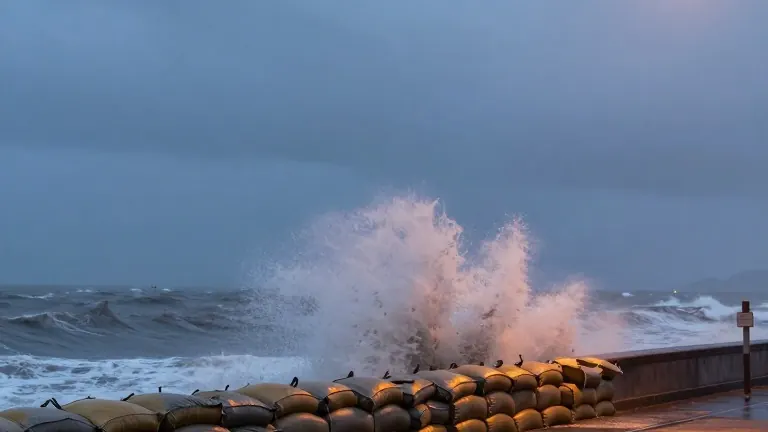
The West Coast is already experiencing the physical effects of this pattern. In early October, a Kelvin wave raised sea levels and contributed to coastal flooding associated with Tropical Storm Rachel. Another wave is currently located between Los Angeles and San Francisco, with several more expected through the fall and early winter. Dillon Amaya, an assistant professor of atmospheric sciences at North Carolina State University, explained that these waves increase the likelihood of flooding rather than causing it directly.
In the Southwest, severe flooding in the Four Corners region forced rooftop rescues and evacuations in late October. Daniel Swain, a climate scientist at the University of California, linked the heavy thunderstorms to moisture from record-warm waters off the West Coast. He stated that the recent marine heat wave was largely driven by human-caused climate change. Swain warned that despite the rain, the water crisis in the Colorado River basin remains severe, with Lake Powell and Lake Mead at record low levels.
The South has the highest chance of above-average precipitation this winter. Northern Florida, southern Georgia, and South Carolina face the greatest risk of wet conditions. This follows a quiet Atlantic hurricane season that produced only one named storm. Historically, El Niño years also correlate with increased tornado activity in the region. In 1998, a similar event led to a deadly outbreak in Central Florida that killed 42 people.
The Midwest faces a different set of challenges. The Upper Midwest is expected to see a smaller snowpack due to warmer temperatures, while Michigan, Ohio, and Indiana tend to be drier during such events. Jon Gottschalck, a meteorologist and branch chief for NOAA, said drought conditions in the Midwest are expected to persist or worsen. Meanwhile, the Northeast may see more frequent nor'easters, which can drive coastal erosion and heavy snowfall, similar to the blizzard of 2016 that dumped over 30 inches of snow on the region.
Source: WFAE