El Nino Delivers Record Rain to Southwest, Disrupting Elections and Supply Chains
More than 20 trillion gallons of water fell on four states in two weeks, forcing evacuations and delaying road repairs in key transport hubs.
By Justin Brooks ·
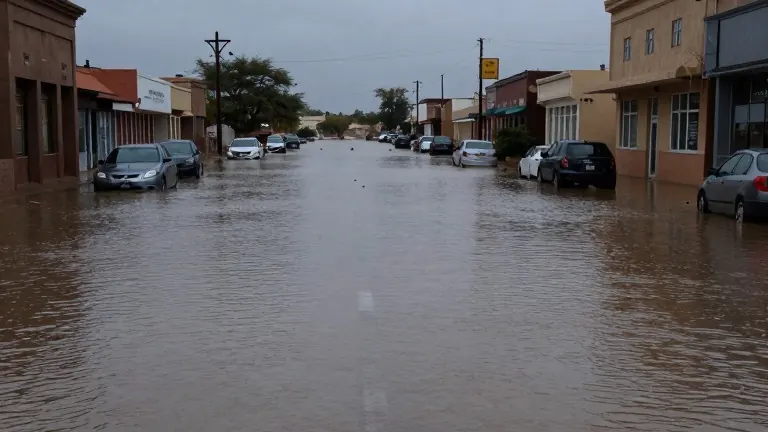
Unusually heavy rain has disrupted commerce and daily life across the arid Southwest, forcing businesses and residents to adapt to persistent flooding.
The weather pattern, driven by El Nino, has delivered a massive volume of water to the region in a short timeframe. Former NOAA chief scientist Ryan Maue calculated that more than 20 trillion gallons of rain fell on the Four Corners states and Nevada over the past two weeks. The National Weather Service estimated up to 4 inches of rain could fall through Monday in the area where New Mexico, Arizona, Colorado, and Utah meet.
The flooding began to intensify in early November. Officials warned of potentially catastrophic conditions in Pagosa Springs, Colorado, a town of about 2,000. The San Juan River reached 16.81 feet late Sunday night, flooding downtown streets before receding. In Arizona, record rainfall was reported, with 7.3 inches falling over two days at Workman Creek near Phoenix. Flagstaff recorded 5.15 inches in two days, marking its wettest Nov. 1 ever. This volume of water has strained local infrastructure and altered standard operational plans for the coming days.
Election Day voting procedures have been adjusted to accommodate displaced voters. The Colorado Secretary of State’s office arranged alternative plans for residents of Pagosa Springs who were evacuated or stranded. Mail ballots can be returned to any drop box or vote center in the state by 7 p.m. on Election Day. Voters casting in-person ballots outside their home county are limited to statewide races. In Durango, police Chief Brice Current said authorities are checking on residents who rode out the flooding, noting that many remain stranded. The Animas River was closed to recreational watercraft due to sewage and chemical contamination.
Transportation networks in the region face delays and closures. Highway 160 remains closed, and officials in Sedona, Arizona, reported that heavy rain washed out part of a main highway between Flagstaff and Sedona. The road is littered with boulders and trees, and guard rails are damaged. In New Mexico, the village of Chama was cut off by road closures as the San Juan River continued to rise. Emergency access routes for remote residents in Utah have washed out, making it difficult to deliver supplies. Ryan Benally, a professor at Utah State University, is coordinating deliveries of bottled water and toiletries to shelters in the area.
Local economies and community services are responding to the immediate needs of residents. In Durango, volunteers are digging mud from yards, and the Animas River remains closed to kayaks. In Tucson, swiftwater rescues are ongoing as meteorologist Aaron Hardin noted that the area received two or three months of rain in a couple of days. In the Pinetop-Lakeside area of central Arizona, manhole covers are popping up, and residents report sewage backing up into homes. The region’s sanitary district has announced these conditions, indicating a strain on local utility systems.
Pagosa Springs residents are preparing for extended isolation. Deanna Chiappetta, living in the Aspen Springs subdivision, said bridges leading out of her neighborhood are impassable. She expects to get into town in the next day or two for groceries but anticipates that supplies will run out quickly. Floodwaters knocked away much of the foundation of a local riverside museum, and campers lived in by some neighbors were washed away. The town had just lifted an evacuation order from previous flooding last week before reimposing it Saturday.
Source: WTOP News
More Business · Rip-Off Report · Report a business · Got a Story?