NC State DNA Tests Reveal Low Genetic Diversity in Coastal Black Bears
New genomic tools will help wildlife officials track individual bears and identify those moved between regions.
By Nicholas James ·
Black bear populations in eastern North Carolina face lower genetic diversity than their western counterparts, a finding that could influence future state conservation strategies. Researchers at North Carolina State University completed a survey that measured genetic variation across the state’s three main bear habitats: the mountains, the Piedmont, and the coast.
The team collected DNA samples from 76 black bears. Forty-nine samples came from mountain populations, and 27 came from coastal populations. These two groups represent the largest bear concentrations in the state. The study excluded the Piedmont region from the DNA sampling phase.
Dr. Matthew Breen, a professor at N.C. State’s College of Veterinary Medicine and the project lead, explained that bears in the east have less variation than those in the west. He noted that this limitation means bears primarily breed with neighbors in the same local area. Over time, this isolation has reduced the genetic pool for coastal bears.
Isabella Livingston, a postdoctoral researcher at N.C. State and the first author of the study, attributed the reduced diversity to historical population declines. She stated that while current inbreeding is lower in coastal bears than in mountain bears, the genetic impact of late 19th and early 20th-century population crashes remains visible. Human infrastructure, including highways and new construction, further restricts coastal bears to specific areas, limiting their movement.
The research team developed new genomic tools to address these challenges. These tools use single nucleotide polymorphisms, or SNPs, to create unique genetic profiles for individual bears. Livingston described these profiles as genomic fingerprints that allow researchers to identify specific animals and determine their population origins.
Breen said the tools can detect when a bear has been moved from one part of the state to another. The genetic profile of a transplanted bear will differ from the local population, making it identifiable to researchers. The team plans to provide these findings to N.C. Wildlife officials to support conservation efforts. They also intend to test the tools on other species, including brown and polar bears, for international population management.
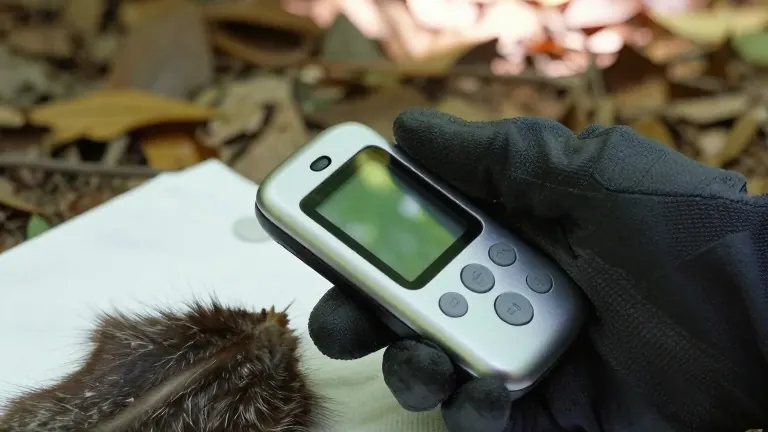
Currently, the N.C. State team is collaborating with the university’s engineering school to build handheld devices for field use. Breen said these point-of-care devices will allow researchers to collect small samples, such as hair follicles or cheek swabs, directly from animals. This technology will streamline the process of gathering data in the field without requiring extensive laboratory preparation for initial analysis.
Source: WUNC