
Satellite Silence: Ukraine's Communication Crisis
Ukraine and Europe are urgently seeking alternatives to Starlink as political tensions with Elon Musk threaten the reliability of the satellite network crucial to the war effort.
By Maya Morris ·
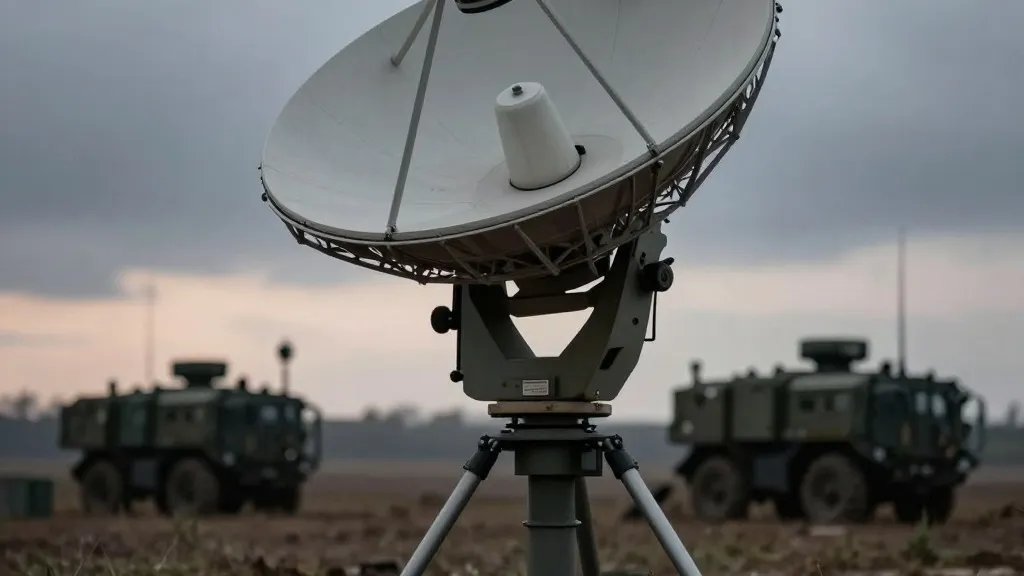
Ukrainian forces are learning to fight in the dark. For years, the war has run on a steady stream of data from above. Now, that stream is flickering. The conflict at the center of this shift is not just military, but political. Elon Musk’s Starlink service has been the backbone of Ukrainian resistance against Russia’s full-scale invasion. But as the service becomes less reliable due to Musk’s own political leanings, a new urgency is driving the region. Ukraine and Europe are now scrambling to figure out how to survive without the network they have come to depend on so heavily.
The numbers behind this dependency are staggering. Starlink is the world’s largest communications satellite network. It provides high-speed internet and data streams to anyone with a compact terminal. This infrastructure has kept civilian lines open and military operations running. It has also expanded the Ukrainian military’s reach. Drones used for air defense and for striking Russian targets are often remotely controlled or guided through these satellite links. The system’s efficiency is hard to match. As one hardware R&D head at the Ukrainian defense company BlueBird Tech noted, Starlink offers some of the best satellite coverage available. The representative, who spoke anonymously for security reasons, pointed out that there are virtually no competitors when you weigh cost, availability, and ease of use together.
The practical limitations are specific but manageable for many. The main issue is positioning. Users must aim the antenna correctly to receive signals from the satellites. This is a technical hurdle, but it has been overcome for years. The current disruption is different. It stems from unexpected service interruptions. These outages are not just technical glitches; they reflect the growing influence of political dynamics on a critical war tool. The uncertainty is forcing a rethink of how communications are maintained on the front lines.
The people involved in this transition include the US government and key European allies. Nations like Poland and Germany have stepped in to help. They have paid SpaceX for tens of thousands of commercial Starlink terminals to be sent to Ukraine. These countries also cover the subscription fees for the service. This financial support has been a lifeline. It has allowed Ukraine to maintain the network scale necessary for both civilian and military use. The partnership has been central to the technological edge Ukraine has maintained in recent years.
There is also a military-grade version of the system in play. The US government has given Ukraine’s military access to Starshield. This is a specialized variant of Starlink designed for military applications. Ukrainian defense companies are using this access to test their own technologies. They are working in cooperation with the military to ensure their gear is compatible. This dual-track approach, commercial terminals for broad coverage and Starshield for specific military needs, has created a robust but complex system. Now, the reliability of both tracks is under scrutiny.
The stakes are high. If the satellite network falters, the ability to coordinate drone strikes and air defense could weaken. The war has become deeply digital. Losing that digital thread could change the balance on the ground. Europe is watching closely. The region is facing the same urgent questions as Ukraine. How do you move forward without a system that has no real competitor? The search for alternatives is no longer a future concern. It is a present necessity. The political winds around Musk’s company are making the situation more volatile. The result is a push to diversify and prepare for a world where Starlink might not always be there.
The transition will not be easy. The combination of cost, availability, and ease of use that made Starlink indispensable is hard to replicate. Any replacement must match that level of performance. The Ukrainian military and its partners are working to adapt. They are testing new methods and relying on the existing Starshield access. The goal is to ensure that communications remain viable even if the commercial service becomes erratic. This is a critical phase in the war. The outcome will shape how future conflicts are fought in the digital age.
Source: Ars Technica · original report published