Spain's high-speed rail crash kills 69 after signal error
A computer failure and a manual override allowed a Renfe train to proceed at full speed into a stopped Iryo train near Toledo.
By Justin Brooks ·
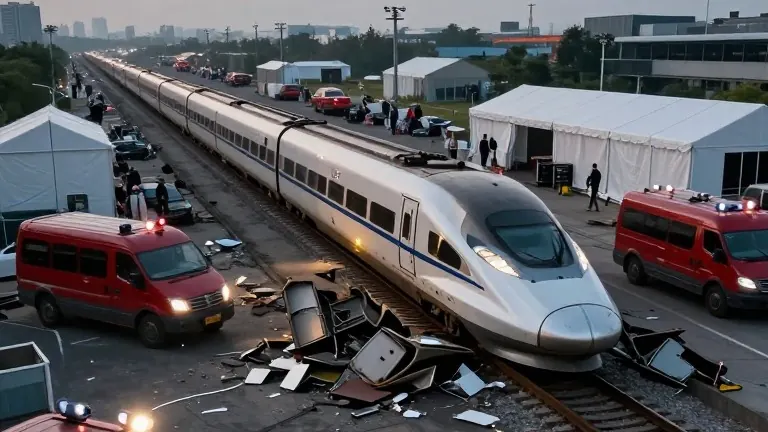
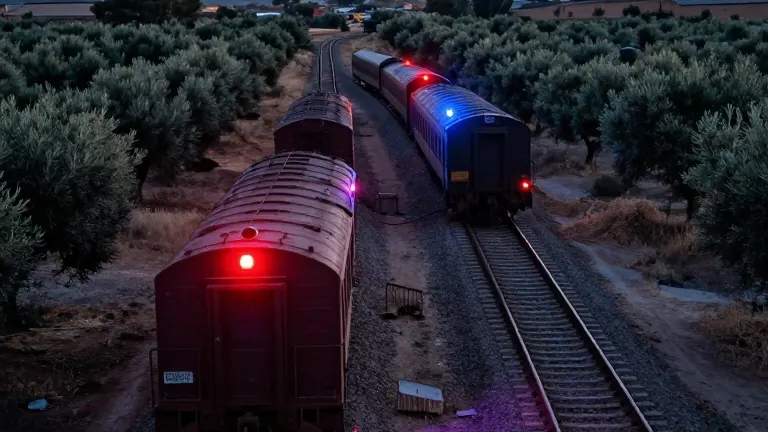
A high-speed Renfe train struck a stationary Iryo train near the town of Urda in Toledo province on Wednesday, killing at least 69 people and injuring more than 100. The collision occurred on the Madrid-to-Seville corridor, marking the third fatal rail accident in Spain this year. Transportation Minister Óscar Puente attributed the crash to a combination of a computer system failure and human error during the incident response.
The sequence began with a malfunction in the LZB train management safety system, which automatically stopped all trains on a 63-kilometer stretch of track. The state-owned infrastructure manager, ADIF, assumed manual control of the system. A train controller issued an order allowing the southbound Renfe train to proceed without speed restrictions. This decision was made despite a red signal prohibiting movement, according to Puente. The Renfe train resumed travel at approximately 124 miles per hour between 8:36 a.m. and 8:52 a.m. local time before impacting the stopped Iryo train.
Puente described the authorization to proceed as a decision made under inexplicable circumstances. He stated that there was a red signal prohibiting movement, yet the train was allowed to move. The Spanish trade union CSIF called for Puente to resign, demanding that the government respect the investigation and the presumption of innocence for the ADIF head of traffic. The transport ministry has not yet responded to requests for comment.
The victims included 24 passengers on the Renfe train and 44 on the Iryo train. Both services were operating between Madrid and Seville. The regional government of Castilla and La Mancha reported that 110 people were hospitalized, with 60 released by Thursday morning. The Iryo train carried 151 passengers, while the Renfe train carried 393. More than 500 emergency personnel, including three helicopters and several drones, were deployed to the scene. The Spanish Civil Guard established four offices in different cities to identify the victims.
Survivors described the impact as violent and chaotic. Patricia, a passenger on the Renfe train, said the train had been stopped for about 20 minutes due to traffic before departing. She reported that the crash occurred less than three minutes after departure, hurling people into the air and pushing train structures into the carriages. Another passenger, Yoander, 25, said he was asleep when he woke up crashing into the seats in front of him. He sustained injuries to his face and leg but noted that others required more immediate help. A third survivor described three cars in terrible shape, with one on fire, another containing trapped passengers, and the main impacted car filled with debris.
Prime Minister Pedro Sánchez visited the site and declared that all of Spain is in mourning. He promised that any negligence or safety system failures would be addressed with firmness. The crash site is located roughly 130 miles from the January disaster in Córdoba province, which killed more than 40 people. That earlier accident was caused by a track break that led to a derailment, a different mechanical failure than the signal error seen this week. The January crash prompted Spain's train drivers' union, Semaf, to raise concerns about track wear and tear caused by high speeds.
Semaf proceeded with a pre-planned nationwide strike on Thursday to demand stronger safety measures. A third fatal incident occurred near Barcelona earlier this year, where a commuter train derailed during heavy rainfall, killing the driver. These events have intensified scrutiny of Spain's railway infrastructure and computer systems. Prior to this year, Eurostat data indicated that Spain had fewer than one railway death per one million inhabitants in 2023, the best record in the European Union. Service on the affected high-speed line remains suspended.
Source: WTVD