Ukraine Drone War: AI takes the wheel in the final stretch
A Kyiv defense firm uses deep learning to guide drones to targets autonomously, arguing the technology is essential for survival against Russia's advancing systems.
By Nicholas James ·
Yaroslav Azhnyuk argues that artificial intelligence is shifting the balance of power in the Ukraine war by making drones ten thousand times more effective. He says this asymmetry is necessary because Russian forces are deploying their own AI-enabled drones. Azhnyuk, who runs the defense firms The Fourth Law and Odd Systems, states that if Ukraine refuses to use AI for defensive decisions while its enemy uses it for offensive ones, the war is lost.
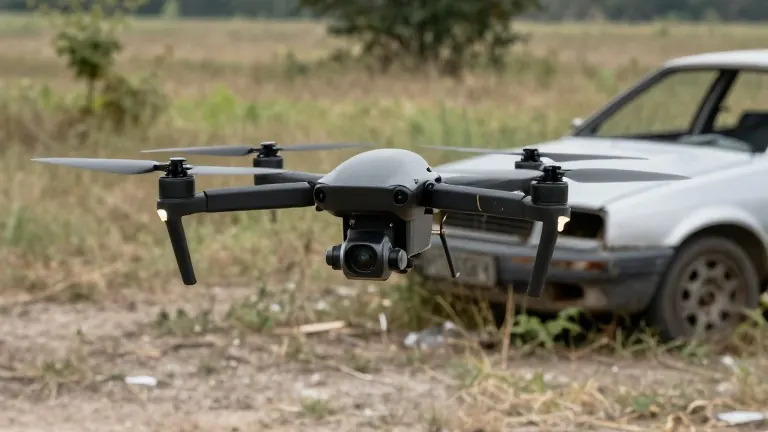
The company's autonomous drone, the Lupynis-10-TFL-1, combines a standard first-person-view airframe with an onboard computer. This system takes full control of the flight path during the last 500 meters of its journey. The software uses a deep-learning neural network trained on hours of combat footage to identify specific targets. It can distinguish between light-armored vehicles, tanks, and flying objects without human input.
In a test outside Kyiv, a pilot named Professor guided the drone toward a dilapidated car. At a red flash on the monitor, the drone locked onto the target. Professor released the control stick, and the aircraft flew itself to the car. A test team member named Stab noted that the drone was doing everything itself. Stab explained that the system is difficult to jam and includes safeguards to prevent the drone from going rogue. Humans still select the initial target, but the machine handles the final approach.
Azhnyuk transitioned to defense after Russia's 2022 invasion. He previously built Petcube, a company that sold one million smart pet cameras in the United States. He compared his new work to his old business, saying they now make cameras that fling explosives instead of treats. The Lupynis-10-TFL-1 is named after Anatoliy Lupynis, a 20th-century Ukrainian poet and political activist. The company names its weapons after Ukrainian intellectuals and artists who were persecuted by Russia.
President Volodymyr Zelenskyy has warned that AI could lead battlefield decisions as soon as next year. Azhnyuk acknowledges the ethical concerns but says they are not unique to AI. He compares the technology to fire or steel, tools that humans have used since ancient times. He argues that the human element remains the final decider of how these tools are used. His immediate priority is survival, noting that AI systems can make decisions in microseconds while human control takes minutes or hours. If Ukraine survives, he says, the country can continue to debate the ethics of the technology. If it does not, there will be no one left to argue the point.
Source: WFDD Public Radio