Somali pirates demand millions for tankers as naval patrols shift
The Honour 25 was held for five months with a ransom demand that started at $7 million and settled at $1 million.
By Justin Brooks ·
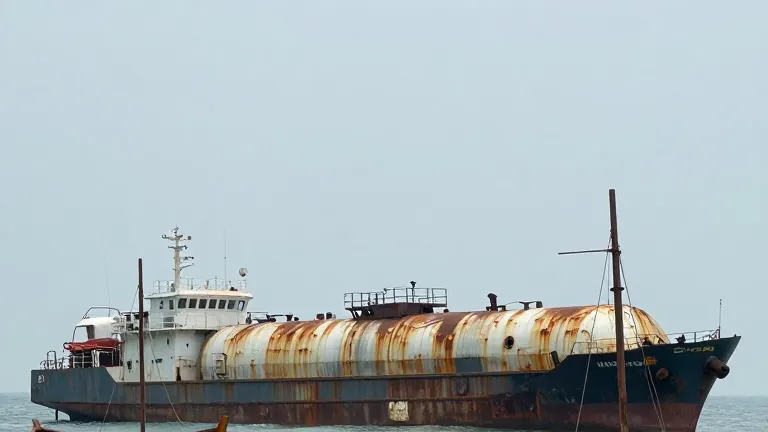
The Honour 25 diesel tanker was hijacked on April 21 while transporting 2,700 tons of fuel from Oman to Mogadishu.
A dozen Somali pirates boarded the vessel in the Gulf of Aden, forcing 17 crew members into a 50-foot bridge for five months. Five crew members died during the standoff, which ended last month.
Piracy in the region had declined sharply after 2013, with only two successful hijackings reported between 2013 and 2023. The European Union's Operation ATALANTA reports that piracy incidents are now at their highest level in a decade and a half.
The resurgence is driven by economic strain in Somalia and a shift in naval assets. The US Navy has redirected resources to the Persian Gulf to address threats in the Iran war, leaving fewer patrols near the Somali coast.
Houthi attacks in the Red Sea have forced shipping companies to alter routes. Deep-pocketed firms are adding weeks and millions of dollars in fuel costs by sailing around Africa's Cape of Good Hope. Smaller operators are taking riskier paths through the Bab al-Mandeb strait or closer to the Somali coast to save money.
Tim Walker, maritime project leader at the Institute for Security Studies, Africa, noted that vessels without armed guards are prime targets. He stated that ship owners of unguarded vessels are more likely to disappear before ransom is paid.
The Honour 25 owner, Wharf Chartering, negotiated the ransom down from $7 million to $1 million. Crew members reported that the pirates were emaciated and consumed the ship's provisions quickly. Yassir Khan, a crew member, said the pirates were often hungry and thin despite their weapons.
Suppliers brought rice, vegetables, and goats to the ship during the captivity. Crew engineer Syed Hussain Yousuf noted that pirates chewed khat, a stimulant that costs $60 per bundle. He suggested that local families or groups were investing in the piracy operations.
The next scheduled step involves the continuation of Operation ATALANTA, though its footprint is smaller than the multinational task force that previously suppressed piracy. Analysts at Castor Vali argue that high oil prices, which have exceeded $100 per barrel, make tankers lucrative targets for future attacks.
Source: CNN
More Business · Rip-Off Report · Report a business · Got a Story?