Protest Violence Drops in France as Schools Reopen Amid New Tensions
French police arrested 779 people during weekend demonstrations, a sharp decline from previous weeks, while scattered unrest in Germany and forced clearances in Portugal marked a volatile weekend across Europe.
By Justin Brooks ·
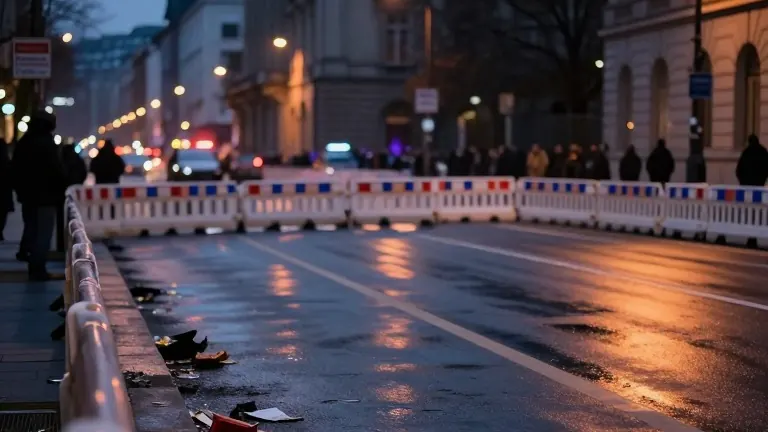
French authorities recorded 779 arrests during weekend protests, a figure that stands in stark contrast to the 2,628 detained during the previous major demonstration on October 17. Police expressed relief that the violence had subsided compared to the intense clashes of the past few weeks, though they remain on high alert as educational institutions resume operations. The drop in arrests follows a period where thousands of stores were looted and a city hall was torched, events that highlighted the growing friction between the government and citizens over rising living costs.
In Paris, the Saturday march on the city’s eastern edge ended with rioters throwing Molotov cocktails at police, injuring three officers and igniting a vehicle. Masked groups also hurled fireworks at officers near the Eiffel Tower, prompting police to charge the crowd and causing tourists to flee the area. Despite these incidents, officials noted that no major damage was reported to shops in Paris or Marseille. This represents a calmer weekend than the protests on October 17 and 24, during which authorities appeared unprepared to manage the scale of the unrest.
A national police official told The Associated Press that approximately 70,000 officers were deployed across the country to manage the demonstrations. The official, who spoke anonymously under police policy, indicated that authorities prepared for both peaceful marchers and those intent on causing trouble. Tensions are expected to rise again on Monday when high schools reopen after their autumn break. Student groups and labor unions have already called for new nationwide protests to take place on Tuesday and Thursday, suggesting the movement will continue to exert pressure on the government.
Germany experienced its own wave of unrest following peaceful protests by more than 100,000 people on Saturday. While the initial marches were largely calm, violence erupted in several cities as night fell. In Frankfurt, rioters attacked police downtown and looted stores, resulting in more than 100 officers being injured. Police detained 54 people, aged 13 to 29, and reported that 17 stores were damaged, with five of those being looted. The situation stabilized by early Sunday morning after police cordoned off the central area.
Boris Rhein, the governor of Hesse, described the violent excesses in Frankfurt as shocking and stated that those who behaved like attackers placed themselves outside of society. Similar disturbances occurred in Cologne, where police used water cannons to disperse crowds, and in Berlin, where protesters attacked police with bottles and pyrotechnics. The youth initiative Gen Z regelt, which organized the demonstrations, issued a statement on Instagram distancing itself from the violence, asserting that it was committed to peaceful protest.
German Interior Minister Alexander Dobrindt accused violent left-wing groups and troublemakers from the immigrant community of hijacking the peaceful demonstrations. He told the daily paper Bild that the rioters and looters would be identified and held accountable. This political reaction underscores the government's intent to address the disorder that followed the largely peaceful daytime marches, which were driven by demands for better education, housing, and climate protection.
In Portugal, protests over housing costs led to a forceful intervention by riot police in Lisbon. After thousands marched through the city on Saturday, several hundred protesters camped out in Rossio square downtown. Police removed tents and pushed people away early Sunday morning, detaining a few individuals. These demonstrations have continued for weeks, inspired by similar movements in Spain, as citizens push for more affordable living conditions.
The weekend’s events across France, Germany, and Portugal illustrate a continent grappling with economic pressures. While France saw a reduction in immediate violence, the reopening of schools sets the stage for renewed confrontation. In Germany, the contrast between the peaceful daytime crowds and the nighttime riots has fueled political debate over accountability. Portugal’s forced clearance of the Lisbon square demonstrates the escalating stakes in the fight over housing affordability in major European capitals.
Source: WTOP News