Netanyahu, Eisenkot Neck and Neck in Critical Israeli Election
Polling shows no clear path to a majority, forcing the country into another potential cycle of coalition negotiations.
By Justin Brooks ·
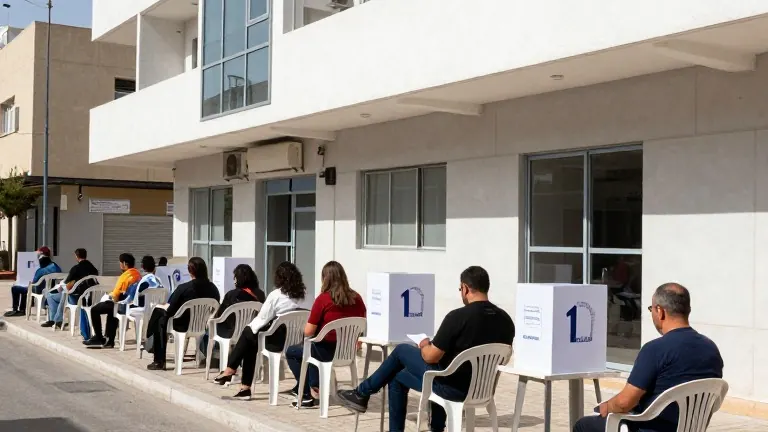
Prime Minister Benjamin Netanyahu and former military chief Gadi Eisenkot are tied in the lead-up to Israel's national elections. Polling data released on Friday places the two leaders at nearly identical levels in the race for the premiership.
Neither candidate’s political bloc is projected to secure the 61 seats necessary to form a governing majority. This outcome suggests that weeks or possibly months of negotiation will follow the vote as parties seek to build a coalition. Israel’s proportional representation system frequently produces fragmented results, leading to complex alliance-building processes.
Security issues have defined the campaign. Opposition parties have focused on the failures preceding the October 7 attacks by Hamas, in which nearly 1,200 people were killed and 251 were taken to Gaza as hostages. These parties demand an independent commission of inquiry, a step Netanyahu has resisted for years. He argues such a body would be biased against him.
Netanyahu has positioned himself as the country's security expert. He cites strategic victories in regional conflicts and his relationship with US President Donald Trump. Eisenkot leads the Yashar Party and heads a "change bloc" aimed at removing Netanyahu from power. This group includes former Prime Minister Naftali Bennett, Avigdor Lieberman, and former general Yair Golan. These leaders span the political spectrum, from right-wing hardliners to left-leaning figures.
Critics have raised concerns about democratic standards during the campaign. Netanyahu is currently on trial for corruption charges, which he denies. His government has pursued judicial reforms that sparked mass protests prior to the war. The issue of conscripting ultra-Orthodox men in religious study has also remained a point of contention after the government failed to enforce a Supreme Court ruling.
In the final days before the vote, Israel’s Channel 12 reported that Netanyahu sought military action against Iran that could have led to a confrontation. Military chief Eyal Zamir opposed this move. CNN reported that Netanyahu also requested new US strikes on Iran, which Trump declined to approve. Netanyahu denied both reports. Eisenkot described an AI-generated image of a nuclear bomb striking Tel Aviv, posted by Netanyahu, as "hysterical."
On the issue of Gaza, the two candidates hold similar positions. Eisenkot has pledged to end Hamas rule in the territory within 18 months. He supports a US-led peace plan or military action if necessary. Israel has struck Gaza almost daily since the ceasefire, stating it targets Hamas operatives. Gaza’s health ministry, whose figures the UN considers reliable, reports that more than 74,000 people have been killed since the war began.
In the West Bank, Eisenkot largely supports settlements but wants to address attacks by extremist settlers. UN figures indicate these attacks are at a record high. The two-state solution has largely disappeared from mainstream political discourse. About one-fifth of Israelis are Arab, and two Arab party blocs are running. While they could theoretically influence the outcome, most leading Jewish parties have ruled out formal coalitions with them.
Approximately 70,000 Israelis have returned from abroad to vote. Hundreds of thousands are casting ballots for the first time. Broadcasters will publish exit polls at 22:00 local time on Tuesday, though these often differ from final results. Votes from soldiers and reservists will be counted mostly on Wednesday, potentially benefiting right-wing parties that are popular with that demographic.
The race is often framed as a duel between Netanyahu and Eisenkot, but other leaders could claim the premiership if they withhold support from a coalition. Many observers fear a deadlock where no bloc reaches a majority and no minority government can be formed. In such a case, new elections would be called, and Netanyahu would remain interim prime minister. Israel held five elections between 2019 and 2022 under similar circumstances.
Source: BBC News