A quarter century later, the iPod still defines pocket music
Twenty-five years after its introduction, the original Apple iPod remains a landmark in personal technology for its ability to store a full music library in a device the size of a deck of cards.
By Justin Brooks ·
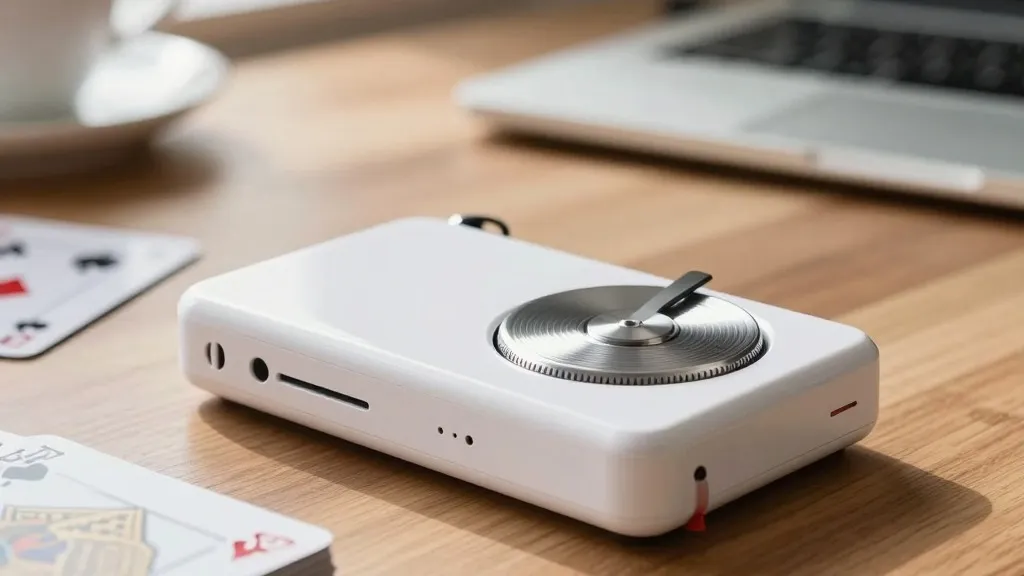
The primary tension in the consumer electronics market of the early 2000s was the gap between the quality of digital music and the convenience of carrying it. While portable players existed, none had successfully combined high storage capacity with a form factor small enough to be truly pocketable. On October 23, 2001, Apple CEO Steve Jobs addressed this specific imbalance by unveiling the first iPod. The device was introduced as a breakthrough digital product that was not a Mac, but it served as a critical extension of the company's strategy to position the computer as the hub for all digital media.
At the time of the launch, Apple was in a period of strong recovery. The company had successfully moved past its earlier struggles with the introduction of Mac OS X, the iBook, and the iMac. These products were performing well with consumers during a difficult economic period following the burst of the dot-com bubble. Jobs argued that the Mac would become the center of a user's digital life, connecting cameras, camcorders, and DVD players. He identified portable music as a massive market without a clear leader, making it an ideal area for Apple to expand its influence.
Jobs acknowledged that competitors such as Sony, Creative, and Sonic Blue already had portable digital music players on the market. However, he stated that none of these companies had found the right formula for digital music. The industry at that moment offered four main options: CD players, MP3 CD players, flash-based players, and hard disk-based jukeboxes. Apple chose the hard disk approach because it offered the best balance of storage and cost for the target audience.
The core promise of the original iPod was its ability to hold a user's entire music collection for $399. The device featured 5 gigabytes of storage, which allowed it to store approximately 1,000 songs. This capacity was calculated based on standard pop songs encoded as MP3 files at 160Kbps. Jobs emphasized that for most people, this volume represented their complete library, a significant leap from the limited tracks available on CD players or early flash drives.
The physical design of the device was a key differentiator. The iPod measured 2.4 by 4 by 0.78 inches and weighed just 6.5 ounces, making it lighter than most cell phones of that era. This compact size was made possible by a 1.8-inch hard drive from Toshiba that was only 0.2 inches thick. The device was designed to be the size of a deck of cards, a dimension that became iconic in the history of consumer tech.
Beyond its size, the iPod introduced several advanced features that set it apart from the competition. It offered 20-minute skip protection and used a single FireWire 400 cable for both charging and data transfer. Apple marketed the FireWire connection as a major advantage, claiming it could transfer the contents of an entire CD to the device in five to 10 seconds. In contrast, USB connections of the same period were cited as taking approximately five minutes for the same task. Filling the entire 5GB device with 1,000 songs was estimated to take only 10 minutes, compared to five hours for a USB-based player.
Powering the device was a rechargeable lithium-polymer battery that provided 10 hours of continuous music playback. Apple stated that the battery could be recharged to 80 percent capacity in just one hour. The user interface was designed for ease of use, featuring a scroll wheel with tactile feedback that allowed for quick navigation by playlist, artist, or song. During the initial presentation, the first song demoed on stage was Building a Mystery by Sarah MacLachlan.
The launch of the hardware was paired with the release of iTunes 2, which included new features such as MP3 CD burning and synchronization support. The Auto-Sync feature ensured that any library a user created and curated on their Mac was always up to date on the portable player. The iPod could also function as a FireWire hard drive, adding utility beyond just music playback.
The original iPod laid the groundwork for a product line that would persist for nearly two decades. The first iPhone did not arrive until early 2007, more than five years after the iPod's debut. The two devices coexisted in Apple's product lineup for over a decade before the iPod's relevance began to fade. The final model, the 7th-generation iPod Touch, was released in May 2019. Although the product line was left unmaintained for a time, it was officially discontinued in May 2022, marking the end of an era for dedicated digital music players.
Source: Tom's Hardware · original report published