Ohio voters to decide fate of data center bans in 10 towns
A grassroots coalition is challenging local charters to block hyperscale AI facilities, while a statewide petition targets a 2027 constitutional vote.
By Nicholas James ·
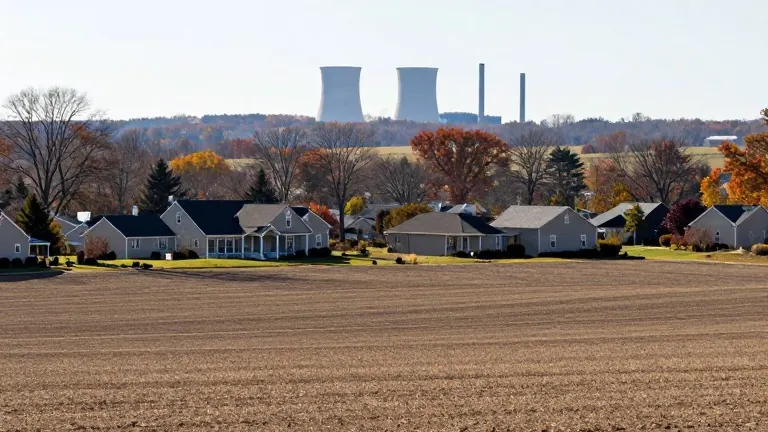
Data center developers are building a 1,000-acre campus on farmland in Mt. Orab, Ohio, while residents face a ballot measure to ban such projects locally. The conflict pits the economic incentives offered by tech firms against the noise, emissions, and secrecy that locals say are disrupting rural life. Nick Owens, a local attorney and lifelong Republican, has led the effort to understand what is happening on the land next to their homes.
Tech companies began moving into Ohio more than a decade ago. They were drawn by cheap land, existing energy infrastructure, and state tax breaks. This combination allowed the state to host some of the fastest data center growth in the country. Projects initially focused on general computing, but the recent wave is driven by artificial intelligence. These new facilities require massive amounts of power and often necessitate the construction of new power plants.
In 2024 and 2025, property records showed that 1,000 acres of farmland and trees in Mt. Orab were sold to a data center developer. The site is in a village of 4,300 people. Nondisclosure agreements prevented residents from learning specific details about the project. Owens worked with another local attorney and a real estate agent to form a group called Conserve Ohio. They mobilized volunteers in nearly all 88 counties in the state. The group includes Democrats, Republicans, and Independents.
This fall, Conserve Ohio is behind ballot initiatives in 10 communities. These measures would amend local charters to prohibit the construction of large-scale data centers. This goes beyond the temporary pauses that hundreds of other municipal and county governments have adopted. Owens says the group wants to find out if communities actually want these facilities. "All too often you hear from the politicians, 'Well, the community should have a say,'" Owens says. "We're going to find out in ten communities whether or not the communities want them."
The group is also collecting signatures for a petition to amend the state constitution. The goal is to ban large-scale data centers statewide and put the question to Ohio voters in 2027. The issue has become a major topic in the current midterm elections. Candidates for statewide office are trying to address voter concerns without fully backing a sweeping moratorium. Conserve Ohio has not endorsed any of them.
In the race for a U.S. Senate seat, former Democratic Senator Sherrod Brown has labeled his opponent, incumbent Republican Senator Jon Husted, as the face of data centers. Brown points to Husted's past role as lieutenant governor, where he welcomed tech companies to Ohio. Husted has introduced a bill in Congress requiring data centers to pay for power grid upgrades. Senate Democrats have blocked the bill, calling it toothless. Husted has accused Democrats of not helping.
Linda Moodie, an independent volunteer with Conserve Ohio, is collecting signatures for the statewide ban. She does not trust that candidates running for statewide office will give people a say if elected. On a recent evening, she set up a booth at a Halloween celebration in Fairfield, a Cincinnati suburb. She handed out candy to children and clipboards with the petition to parents. "The closer it hits to home, the more people that are going to want to do something," Moodie says.
The data center issue has also affected local political enthusiasm. Owens, who served as a Trump delegate at the 2024 Republican National Convention, says Republican enthusiasm has dampened due to data centers and high diesel prices. This county voted 80 percent for President Trump in 2024. Trump recently posted on Truth Social that communities wanting data centers would be successful and rich. Owens calls the statement tone deaf. Construction at the Mt. Orab site has not yet begun, and it is not clear when it will start.
Source: WFAE
More Business · Rip-Off Report · Report a business · Got a Story?