Hendersonville removes creek berm to expand floodplain
The city completed the first phase of the Lower Mud Creek project on Oct. 30, adding 20 acre-feet of storage to protect nearby properties.
By Justin Brooks ·
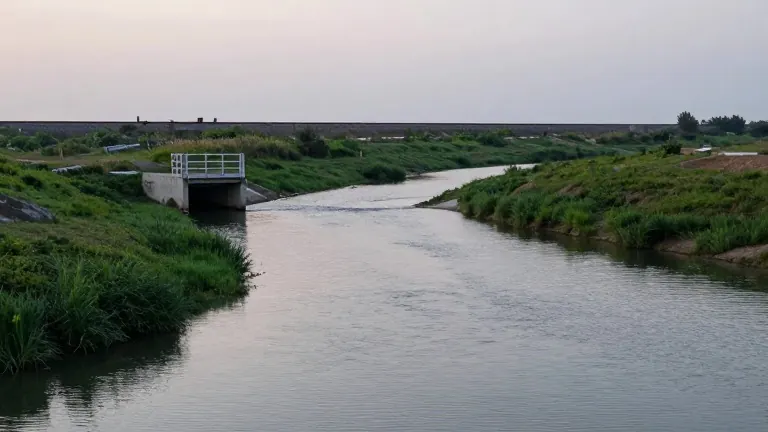
The City of Hendersonville finished the first phase of the Lower Mud Creek Floodplain Restoration and Flood Risk Reduction Project on Oct. 30. City officials held a ribbon-cutting ceremony and a walking tour to mark the completion of the work, which took more than 20 years to plan and build.
The project restores roughly 27 acres of floodplain, wetlands, and stream habitat. Previously, Mud Creek was restricted to a narrow channel near the railroad tracks by a large earthen berm. This configuration limited the creek's ability to expand when water levels rose. The new design removes part of the berm and redirects the stream into the restored natural area.
Michael Huffman, the city's stormwater and parks director, explained the shift in strategy. "Instead of trying to work against the water, we want to work with the water," Huffman said. "This area is historically the floodway, the floodplain, the area that has always flooded."
The restored floodplain is engineered to absorb higher water volumes. When the creek rises, the expanded area allows water to slow down and soak back into the ground. The project adds approximately 20 acre-feet of flood storage capacity, which equals about 6.5 million gallons of water.
City officials estimate this added capacity will reduce flood risk for up to 93 nearby properties. Those properties hold an assessed value of approximately $60 million. An automated water-control gate is part of the infrastructure; it rises and closes automatically based on the stream's water level.
Huffman described the design as a new approach to flood management in western North Carolina. He noted that Hurricane Helene reinforced the need for such resiliency measures. "It let us understand the importance of projects like this and resiliency and building resiliency for our community," Huffman said.
The city funded the project through a mix of local funds and state grants. Contributors included the N.C. Division of Water Infrastructure, the N.C. Land and Water Fund, the N.C. Water Resources Development Grant Program, and the N.C. Flood Resiliency Blueprint. Hendersonville already owns an additional 22 acres downstream that may serve as the site for a future expansion of the restoration work.
Source: WLOS News 13