Herzog Begins Government Mandate Consultations as Haredi Faction Withholds Recommendation
President Isaac Herzog started two-day talks to select a prime ministerial mandate, with Gadi Eisenkot leading early endorsements despite a split in the ultra-Orthodox United Torah Judaism party.
By Justin Brooks ·
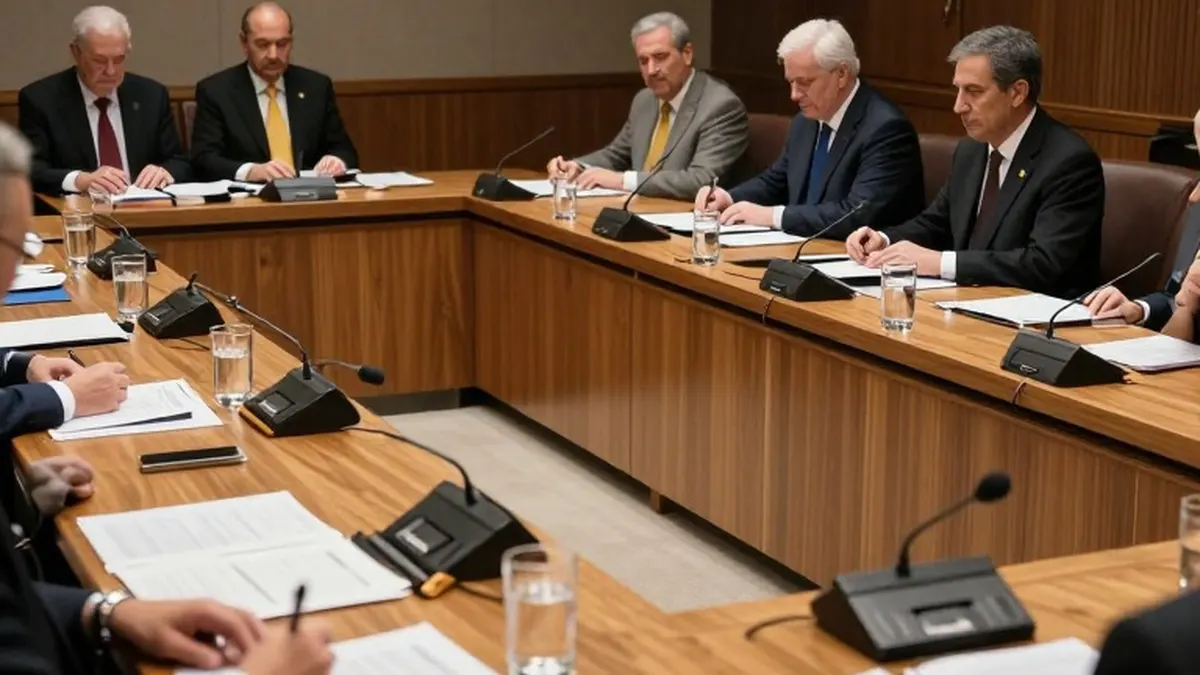
President Isaac Herzog commenced formal consultations on Wednesday evening to determine which lawmaker will receive the mandate to form the next Israeli government. The two-day process began with smaller parties and is scheduled to conclude on Thursday with Prime Minister Benjamin Netanyahu’s Likud bloc. Under the constitution, the president must select the figure he believes has the best chance of building a coalition, a decision that does not necessarily align with the party holding the most seats.
The ultra-Orthodox United Torah Judaism party, which holds seven seats in the Knesset, signaled a significant internal division on Wednesday. The Degel HaTorah faction, representing the Ashkenazi ultra-Orthodox community, announced it would abstain from recommending a candidate. This faction, which includes party chairman MK Yaakov Asher, stated it is following the instructions of spiritual leaders Rabbis Dov Lando and Moshe Hillel Hirsch. The remaining three lawmakers, who belong to the Hasidic Agudat Yisrael faction, have not yet declared their position.
This abstention underscores a growing rift between the party and Netanyahu. The disagreement centers on the outgoing coalition's failure to pass a law securing military service exemptions for Haredi men. While the Degel HaTorah faction has taken a firm stance, the Agudat Yisrael faction is expected to meet with the president on Thursday. Regardless of their decision, Gadi Eisenkot of the Yashar party is widely favored to secure the mandate, as he held a clear lead in recommendations by Wednesday night.
The initial consultations were marked by pointed exchanges between the president and party representatives. Orit Strock, representing Religious Zionism, recommended Netanyahu for a broad national government. She argued that Arab parties are not legitimate participants in the process because of their nationalist stance rather than their ethnicity. Herzog challenged this view, asking how to distinguish such claims from racism. He noted that Yoav Segalovitz, a Jewish police commander, is the second candidate on the Arab-led Ra’am list.
During the same session, Herzog rebuked Religious Zionism representative Tzvika Mor for describing the election results as a hostile takeover of the state under the guise of democracy. The president called the remark extremely dangerous. Moshe Feiglin, the sole member of the Zehut party, also recommended Netanyahu but expressed concern over the legitimacy of the election due to ongoing investigations into alleged voter fraud.
Shas, which suffered its worst election loss since 1992, confirmed its support for Netanyahu. Representatives from the Sephardi ultra-Orthodox party defended their stance on military conscription, stating they prioritize recognizing the value of Torah scholars. When asked about the possibility of a unity government, Shas representatives maintained that it was for Netanyahu to form such a coalition, urging Herzog to grant him the mandate.
Avigdor Liberman’s Yisrael Beytenu party endorsed Eisenkot, confirming its intention to rule out coalitions with both Arab and Haredi parties. MK Oded Forer explained that the refusal to work with these groups was strategic rather than personal. He argued that the current government has not taken responsibility for the October 7 events and suggested that elements within Likud might be open to future cooperation.
As of Wednesday night, Eisenkot is projected to receive at least 56 recommendations, compared to 53 for Netanyahu. The Arab-led Joint List had not yet indicated whether it would support Eisenkot or abstain. If Eisenkot receives the mandate, he will have a maximum of 42 days to form a government. His path may be complicated by internal opposition within his own bloc to working with both Arab and Haredi partners.
The consultations are set to resume on Thursday morning with United Torah Judaism, followed by other major parties. The outcome will determine whether the lead remains with Eisenkot or shifts as the largest parties cast their recommendations.
Source: The Times of Israel