Army tests mass grave digging techniques at Fort Bragg
The military tested whether heavy machinery can excavate and refill burial trenches for 100 bodies without damaging remains.
By Nicholas James ·
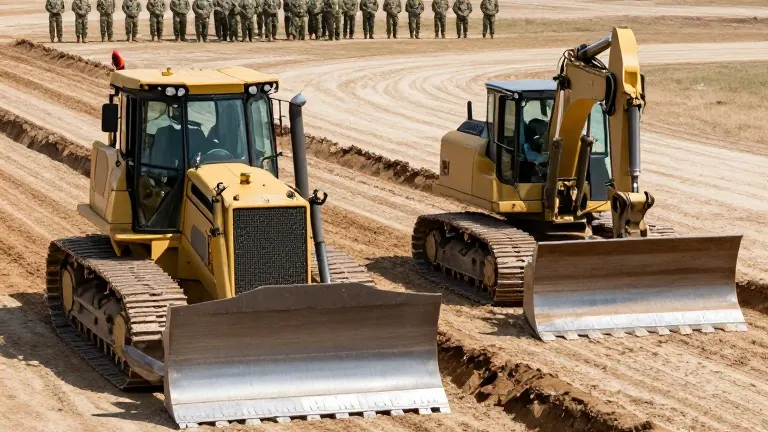
The United States Army conducted a large-scale test at Fort Bragg in North Carolina to determine if heavy equipment can dig and fill mass graves quickly and safely. The exercise took place as part of Phase II of Operation Dragon Covenant. The goal was to verify if temporary battlefield burial methods are feasible for high-intensity conflicts.
The Army has not used mass graves at this scale since the Korean War in the early 1950s. The latest training marked the first time in more than 20 years that military chaplains trained specifically for temporary battlefield interment. Religious affairs specialists also participated in the drills.
The test focused on the structural integrity of the trenches. Operators used bulldozers and backhoes to excavate soil. They then backfilled the trenches to ensure the ground would not collapse and that human remains would not be damaged during the process. A standard temporary mass grave consists of five parallel trenches designed to hold 100 bodies. During the exercise, operators completed a full 20-body trench within an hour and 15 minutes.
Sgt. 1st Class Delbert Ruede explained the purpose of the drill in a military article. "If we went to war tomorrow, we would be making this up as we went along," Ruede said. He added that the team took a scientific approach to maintain control over the process and care for the fallen.
Soil conditions played a major role in the training. 1st Lt. Connor Thompson noted that digging in dry sand differs significantly from working with frozen ground, clay, or mud. "Backfilling without desecrating the remains is where the real skill lies," Thompson said. He emphasized that giving operators actual practice time provides real data rather than assumptions about their capabilities.
The Army stated that the exercise validated the concept of battlefield temporary interment. The military aims to use the data collected to create foundational blueprints for future missions. These plans are intended to meet operational requirements while honoring the service members.
The next steps involve applying the lessons learned from Fort Bragg to future military planning. The Army will use the results of Operation Dragon Covenant to refine its procedures for temporary burial sites in potential future conflicts.
Source: WBTV