Lexington County churches restore 160 graves in historic burial ground
St. Michael Lutheran and Pleasant Spring AME churches completed a decade-long restoration of a site used from 1814 to 1922.
By Nicholas James ·
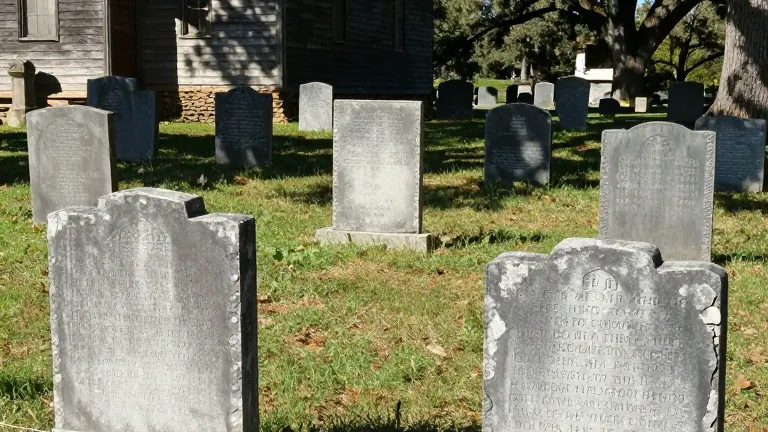
More than 160 graves have been identified and restored at the St. Michael African American Cemetery in Lexington County.
A rededication ceremony held on Sunday marked the completion of a restoration project that began in 2017. The event included a worship service, a musical concert, and a community reception. Descendants of the interred, local congregants, and neighbors attended the gathering to celebrate the site's recovery.
Pamela Redmon Smith attended the ceremony as a direct descendant of Belton Spann. Spann died as a free man following emancipation. Smith noted that Spann was a voter and property owner during his lifetime. A portion of his former property on Lake Murray Drive is now occupied by a Wendy's restaurant. Smith described the discovery of the burial site as a spiritual experience that provided a tangible connection to her ancestry.
Pastor Frank W. Anderson of St. Michael Lutheran Church stated that the restoration serves as an act of reconciliation. He emphasized that the process involves acknowledging historical truths rather than minimizing past suffering. Anderson discovered the cemetery after his daughter ran near the site. He noted that no written records existed for the graveyard when the work began.
Initial restoration efforts focused on clearing underbrush. Volunteers quickly realized the extent of the neglect. The team had to determine the physical boundaries of the graveyard and assess the condition of the tombstones. The site had been used by Black Americans in the community from 1814 to 1922.
St. Michael Lutheran Church was established in 1812 by Reverend Godfrey Dreher. His father, Layman John Dreher, was a prominent slaveholder in the Lexington district. The congregation included enslaved African Americans who worshipped from the church balcony. In 1842, the church records listed 31 women and 27 men as colored members. In 1869, five men purchased land to found Pleasant Spring AME church. July Spence, a founding elder of that congregation, is buried at the site.
Archaeological surveys confirmed the presence of over 160 burial sites. The graves include headstones for those who died as freed persons and unmarked graves for those who died while enslaved. Approximately 16 headstones bear full names, and 13 footstones contain initials. One fieldstone features hand-inscribed initials. Since 2017, volunteers from St. Michael, Pleasant Spring, and the University of South Carolina have cleared debris. Many headstones were stabilized with metal braces to ensure their long-term preservation.
Anderson stated that the restoration revealed new historical details, including the burial sites of founding members of Pleasant Spring church and children interred with their families. Rev. Marion F. Reeves Sr. of Pleasant Spring AME church expressed hope that the site will serve as an educational space. He urged visitors to leave with a deeper understanding of the local history and to view reconciliation as an ongoing responsibility.
Source: WEPR