Asian markets rise after US midterms as chip stocks drag South Korea lower
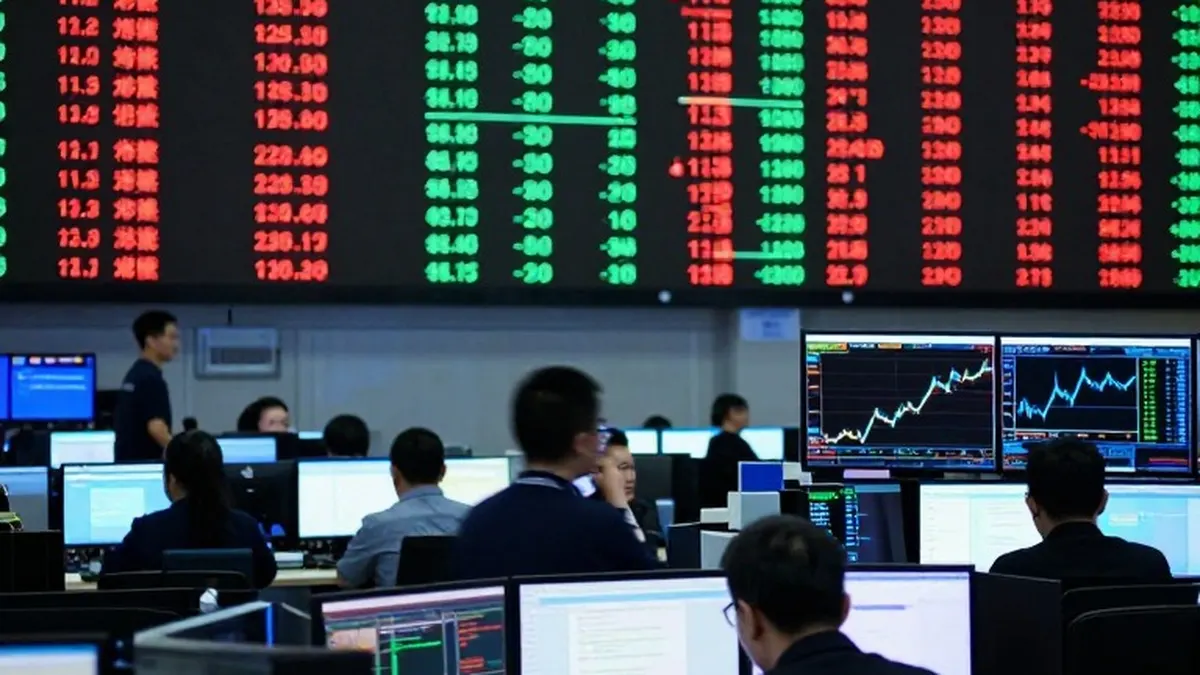
Several Asian markets followed Wall Street higher on Thursday, while selling in artificial intelligence and semiconductor shares weighed on South Korea, Japan and Taiwan.
By Nicholas James ·

Asian stocks mostly advanced on Thursday, November 5, after a strong Wall Street rally following U.S. midterm elections that ended the Republican Party’s sole control of Washington. Markets with less exposure to artificial intelligence generally gained, while selling in chipmakers pushed South Korean shares sharply lower. Brent crude traded near its lowest price in two months.
South Korea’s Kospi briefly dropped more than 4% before narrowing its decline to 3.5% by late morning, reaching 5,484.38. Samsung Electronics fell 5.7%, and memory chip producer SK Hynix lost 7.4%. Japan’s Nikkei 225 slipped 0.5% to 61,914.53. SoftBank Group, an investor in OpenAI, declined 5.3%, while chipmaking equipment supplier Tokyo Electron fell 7.7% and testing equipment manufacturer Advantest dropped 9.4%. Taiwan’s Taiex retreated 1.6%.
Elsewhere, Hong Kong’s Hang Seng climbed 2.8% to 24,597.59, and the Shanghai Composite gained 0.1%. Australia’s S&P/ASX 200 advanced 1.9% to 9,003.40. Those gains followed Wednesday’s U.S. rally, when the S&P 500 rose 1.6%, the Nasdaq composite added 1.4% and the Dow Jones Industrial Average surged more than 1,500 points, or over 3%.
Hospital operators and dollar stores catering to lower-income Americans were among the leaders in the broad U.S. advance after Republicans suffered losses nationwide. U.S. shares typically rise after midterm elections regardless of the outcome. Investors generally favor divided government because it reduces the likelihood of sweeping economic changes, although corporate earnings and interest rates tend to matter more for stocks over the longer term.
Some businesses faced a different outlook. Trump Media & Technology Group plunged 24.5% on Wednesday to $4.49, far below the $175 peak it briefly reached five years earlier. Its core business is Truth Social, best known for President Donald Trump’s posts. Tesla lost 3.3%, and SpaceX declined 3.8%. Elon Musk, who contributed heavily to Republicans and previously served as a senior Trump adviser, is among the potential subjects of congressional investigations under Democratic control.
The Republican setback also intensified concerns that valuations tied to the AI expansion have risen too far, given Trump’s support for the industry. Meanwhile, the prospect that a Democratic-led Congress could press him to scale back the war with Iran weighed on military suppliers. Lockheed Martin dropped 6.9%, Northrop Grumman fell 4.5% and General Dynamics declined 2.6%.
That possibility also contributed to an 8.7% plunge in Brent crude on Wednesday to $94.62 a barrel. The decline hurt major oil producers, whose shares had climbed for much of the year: ExxonMobil lost 4.6%, and ConocoPhillips fell 5.2%. Early Thursday, Brent slipped another 0.8% to $93.91, while U.S. benchmark crude decreased 1% to $87.27.
Renewable energy shares gained despite the oil selloff. Cheaper oil can reduce the incentive to adopt alternative energy, but Democratic control of Congress could improve prospects for solar and wind businesses. First Solar rose 4.6%, and Enphase Energy gained 3.7%.
In early Thursday currency trading, the dollar weakened to 157.96 Japanese yen from 158.41 yen. The euro strengthened to $1.1256 from $1.1228.
Source: ABC News
More News · National news · Report a business · Got a Story?