Army sets Nov. 25 date to detonate degraded lead azide in Iowa
The military plans to blow up nearly five tons of volatile material at the Iowa Army Ammunition Plant despite an active legal stay and local opposition.
By Nicholas James ·
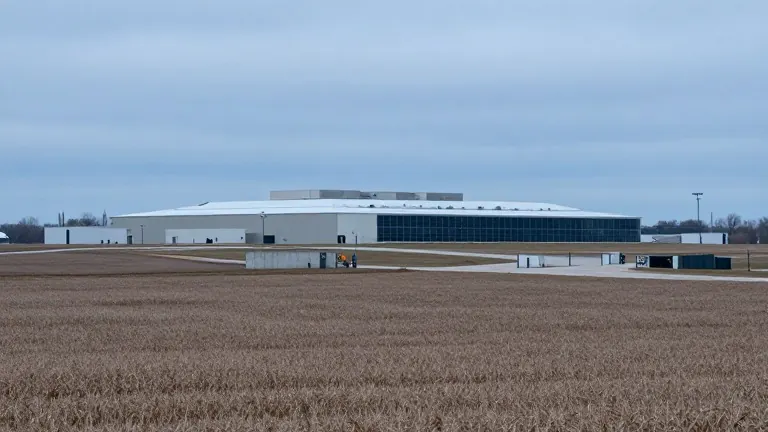
The U.S. Army announced late Sunday that it will detonate nearly five tons of degraded lead azide on Wednesday, Nov. 25, at the Iowa Army Ammunition Plant. The military stated it is postponing the blast from the original date to allow for optimal weather conditions and the placement of mitigation measures. This decision comes after the Army said it would proceed with the operation despite a federal judge granting an emergency stay earlier in the week.
Lead azide, a volatile compound used to detonate munitions, has been stored at the plant for years. According to the Army, the material has recrystallized within its containers over time, making it vulnerable to spontaneous detonation. The plant occupies roughly 19,000 acres in rural Des Moines County, bordering the town of Middletown, which has a population of about 400.
Court filings indicate the Army notified the Environmental Protection Agency of the degraded material on or about March 12. By January, however, the military had already activated a multi-agency working group to explore treatment alternatives. A September letter from Amy L. Borman, deputy assistant secretary of the Army for Environment, Safety and Occupational Health, stated that the working group conducted extensive technical evaluations and risk analyses from January through April 2026.
In March, the Army awarded a contract to MuniRem Environmental, a Georgia-based firm specializing in chemical neutralization of munitions. The military canceled the contract two months later, citing safety concerns. Valentine Nzengung, the chief executive of MuniRem, said the Army informed him that controlled detonation was deemed the safest method, but provided little additional detail.
The EPA issued a permit effective Nov. 13 that authorized the controlled detonation to mitigate the explosive hazard. The permit requires the Army to collect samples, monitor conditions before, during, and after the blast, and notify the public. The Army initially planned to detonate the material on Nov. 20 and issued a public advisory instructing residents to vacate the area.
Local residents and environmental groups, including the Iowa Environmental Council and Sierra Club, filed an emergency motion with the Court of Appeals for the Eighth Circuit less than 20 hours before the original blast date. They argued the permit did not adequately protect vulnerable populations or local livestock from lead contamination. A federal judge granted a temporary stay on Thursday, halting the planned explosion.
In filings dated Nov. 22, the federal government urged the court to lift the stay, warning that the crystallized lead azide poses an immediate risk of spontaneous explosion, particularly as freezing temperatures set in. The government argued that a planned detonation offers safeguards and monitoring that an unplanned explosion would not. It acknowledged that a controlled blast would release lead dust but maintained it was the only way to minimize the release.
The Army stated in a social media post late Sunday that the health and safety of Americans remains its first priority. The detonation is now scheduled for Wednesday, following a brief postponement from Monday.